
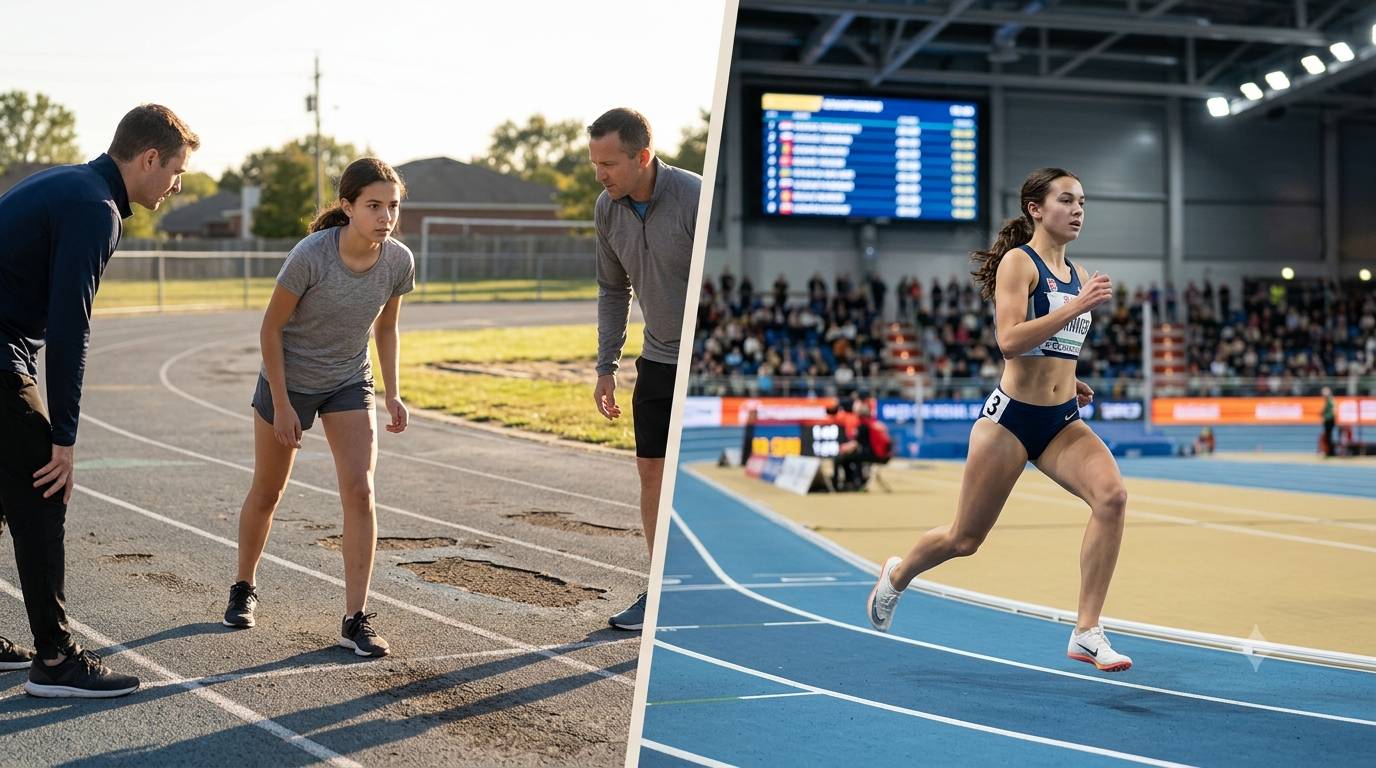
Competition day can look very different from an athlete’s first practice, yet the habits that support performance begin early. A useful training plan gradually adds technical detail, physical demand and event-specific routines while keeping the athlete focused on repeatable actions. Equipment can support each stage when it is introduced for a clear reason.
1. Start with simple reference points
Early sessions should make the basic task easy to understand. Cones, lines and visible targets can show where to start, move or finish without giving the athlete too many instructions at once. The goal is not to build a complicated station. It is to create a clear task that can be repeated often enough for the coach to observe patterns.
2. Build technique before adding pressure
As athletes become familiar with the movement, coaches can adjust one variable at a time. Distance, speed, approach length or resistance might change depending on the event. Athletics equipment can help create these progressions, but the athlete should still recognise the core skill from the earlier stage. Large jumps in difficulty can make it harder to tell whether a problem comes from technique or from the new demand.
3. Make practice increasingly measurable
Once basic movement is stable, measurement can give useful context. Coaches may record times, distances, repetitions or other relevant training information using consistent methods. The purpose is not to turn every drill into a test. It is to make changes visible and help decide whether a progression is producing the intended response.
4. Introduce competition-like routines
Athletes often benefit from practising the sequence around an event, not just the event itself. Warm-up timing, equipment checks, waiting periods and preparation cues can all be rehearsed. Familiar routines reduce unnecessary decisions on competition day. They also reveal practical issues while there is still time to adjust them.
5. Reduce dependence on training aids
Some tools are designed to teach a pattern rather than remain part of the final performance. As competition approaches, coaches can remove cues that will not be available later. This helps the athlete test whether the movement has become self-sustaining. Athletics equipment still has a role, but its use may shift from teaching the skill to preparing the athlete for realistic conditions.
6. Rehearse change as well as routine
Competitions do not always unfold exactly as planned. Delays, weather, different layouts or altered schedules can affect preparation. Training can include occasional controlled changes so athletes learn to adapt without abandoning their key habits. The aim is not to create unnecessary uncertainty, but to separate essential routines from preferences.
7. Keep checks practical
Before important sessions and events, equipment should be checked and prepared according to the facility’s procedures and relevant guidance. Coaches can use a short checklist so routine tasks do not depend on memory. This may include confirming that required items are present, in suitable condition and ready for the planned activity.
8. Let the final week reflect the plan
As competition day approaches, coaches usually want each session to have a clear purpose. That may mean maintaining familiar technical cues, refining event routines or avoiding unnecessary changes. Introducing completely new athletics equipment at the last moment can add distraction unless there is a specific need. Familiarity often becomes more valuable as the event gets closer.
The journey from first practice to competition is not a straight line of making every drill harder. It is a process of making skills more stable, information more useful and routines more reliable. When each stage connects to the next, competition day feels less like a separate challenge and more like another setting in which the athlete can apply well-practised habits.
Coaches can also use post-competition reflection to improve the next cycle. The useful questions are practical: which preparation routines transferred well, which cues remained clear under pressure and which parts of the setup caused unnecessary delay? Those observations can return to normal practice. Competition day then becomes a source of information rather than an isolated test at the end of training.
Leave a Reply
You must be logged in to post a comment.